Showing posts with label his dark materials trilogy. Show all posts

26 September, 2017

[Special] Banned Books Week!

When one says banned books, what is brought to mind? Antiquated stories that perhaps have lost touch with their meaning in a world that seems determined to ignore the value of them? Perhaps they’re ones with poor language or themes. 

Banned books, or more precisely banned and challenged books, are a hot topic in libraries. Anyone can challenge a title if they feel it doesn’t fit into their own moral compass. Some books, as with the case of Brown Bear, Brown Bear, What do you see? have simply been victims of mistaken identity. In the case of Brown Bear, Brown Bear, What do you see? the author Bill Martin Jr. was mistaken for author Bill Martin who wrote Ethical Marxism: The Categorical Imperative of Liberation. Some have been challenged because of topics they cover such as The Giver (euthanasia) or The Lorax (damage to the environment by the logging industry), and some get picked because a parent deems them full of inappropriate language like the Captain Underpants series. 

You might ask yourself, why is this such a problem? The answer, my friend, is that just because you have an opinion doesn’t mean you should limit materials from others. Since it's invention in 1982, Banned Books Week has been used to bring awareness to books that are frequently banned or challenged throughout the United States and the World. If you'd like to look through the most recent list (from 2016) please check here.

In honor of the upcoming week, here are 5 of my favorite frequently challenged books!

#5 - The Hunger Games Trilogy by Suzanne Collins
Reasons for challenges: Religious Overtones and unsuited for age group.

Taken as part of the highly popular Dystopian future setting, The Hunger Games focuses on the story of Katniss Everdeen, a young woman in a desolate version of what once was America, renamed Panem. Throughout the series, the reader's swept along with some of Katniss's very questionable choices, challenges of what a Utopian society looks like from the lower levels of society, and presents the idea of children killing children. It's a story of growth and how happy endings aren't always easy, definitely a good read.

#4 The Giver by Lois Lowry
Reason for challenge:  violent and sexual scenes, infanticide, euthanasia, and “sexual awakening.”

Perhaps one of the most well known Utopian/Dystopian novels around, The Giver introduces readers to the world where everything is 'the same'. There's no colours, no music, everything is regulated by the government. At the age of twelve you're given your life assignment and set to train for it, the very young and very old are 'sent elsewhere' to spare the needs of the community. It's not a very happy place, but emotions aren't exactly there to know any different. It's a challenging book, making the readers question everything about the books and one of perhaps the most influential things I read from the time I was in middle school onward.
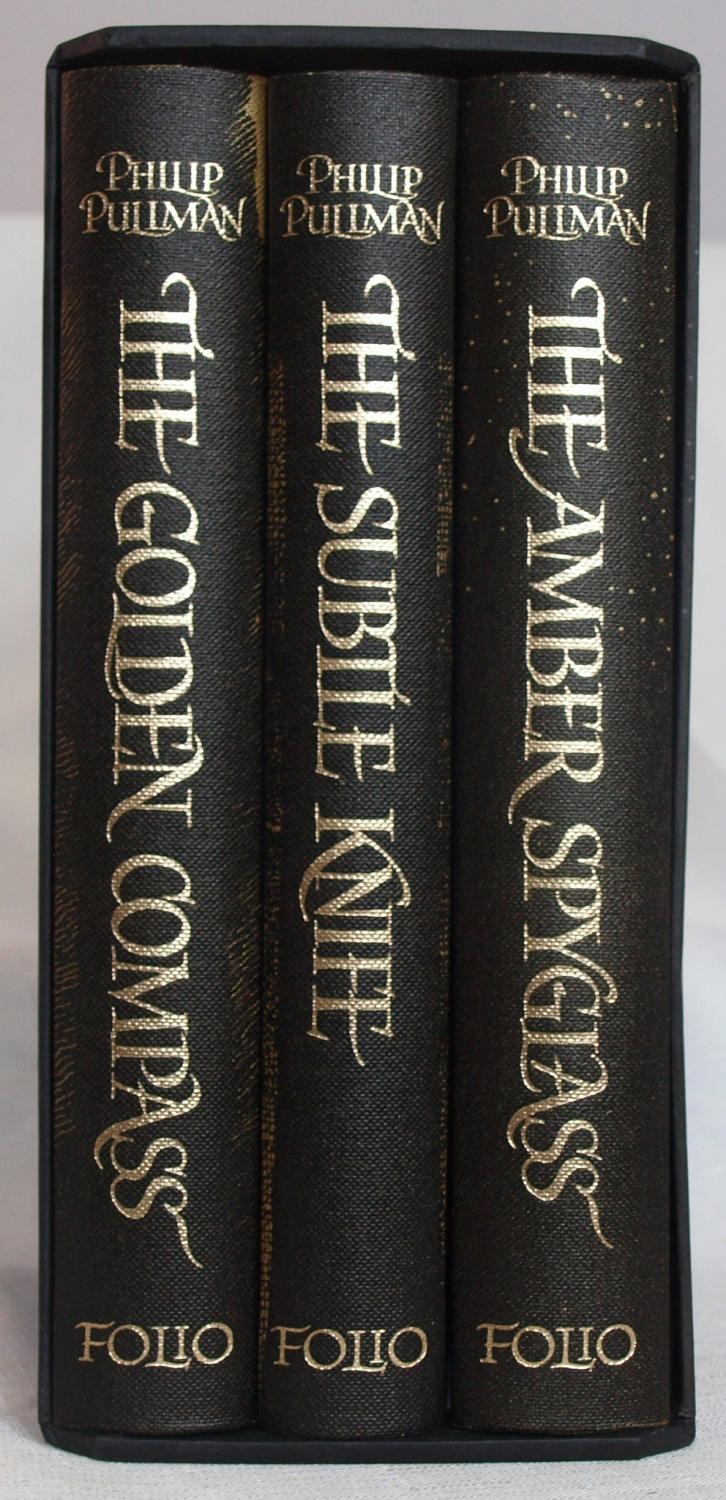
#3 His Dark Materials Trilogy by Philip Pullman
Reasons: political viewpoint, religious viewpoint, and violence

The world where the His Dark Materials trilogy takes place is a parallel world to our own, though with the key addition of Dæmons - a physical form of one's conscience. Originally Published as Northern Lights in Europe, the first book introduces readers to Lyra, a rebellious child left in the care of scholars while her parents go gallivanting around on their own thing. Mostly wild, Lyra seems to have a knack for getting herself into trouble. The series gets darker as it goes along, pulling in elements from this world and that, but don't let that stop you from reading it. This series is one of my favorites, set up as a fantasy world and I'll admit, I've always wondered what form my dæmon would have settled on.


#2  Bridge to Terabithia by Katherine Paterson
Reasons: Occultism/Satanism, offensive language, disrespect to adults, violence, and 'intense fantasy'

A fantastic tale of childhood imagination, the Bridge to Terabithia focuses on the friendship of Jess Aarons and Leslie Burke, two children who are a little off the beaten path of life. They create a vivid fantasy life outside of school to deal with many of their childhood fears and issues. However when a tragedy strikes, make sure you have tissues to deal with the fall out of things that happen. I love this book, and yes, it does make me cry every time I read it.

#1 Harry Potter Series by J.K. Rowling
Reasons: Occultism, Witchcraft, Violence, Anti-Family, Satanism

The story that built a generation, and yes I'm very much part of that generation. Undoubtedly one of the biggest hits in the past 30 years, Harry Potter is the incredibly coming of age story of a boy who comes from a impossible family life to becoming a man of his own making. Captivated in seven books and several not quite direct spin-offs, Harry Potter teaches the meaning of friendship, shows hardship, and even gives a bit of a historical lesson (if one squints and tries to read more in the lines). Definitely one of my favorite series to reread over and over.

23 September, 2014

Lions, Tigers, and Banned Books, Oh my! Top 5 Banned Books Week Picks


Banned Books Week is not a new invention. Launched in 1982 as a response to a surge of challenges to titles in libraries, schools, and bookshops - Banned Books Week has developed into an annual event to educate students and celebrate our freedom to read. I can't list out all the books that are challenged or banned on my blog (it'd take too long), but you can check out the top 10 books from 2001-2013 here.

Without further ado, here are my Top 5 Banned Books containing both single books and series.

#5 - The Hunger Games Trilogy by Suzanne Collins
Reasons for challenges: Religious Overtones and unsuited for age group.

Taken as part of the highly popular Dystopian future setting, The Hunger Games focuses on the story of Katniss Everdeen, a young woman in a desolate version of what once was America, renamed Panem. Throughout the series, the reader's swept along with some of Katniss's very questionable choices, challenges of what a Utopian society looks like from the lower levels of society, and presents the idea of children killing children. It's a story of growth and how happy endings aren't always easy, definitely a good read.

#4 The Giver by Lois Lowry
Reason for challenge:  violent and sexual scenes, infanticide, euthanasia, and “sexual awakening.”

Perhaps one of the most well known Utopian/Dystopian novels around, The Giver introduces readers to the world where everything is 'the same'. There's no colours, no music, everything is regulated by the government. At the age of twelve you're given your life assignment and set to train for it, the very young and very old are 'sent elsewhere' to spare the needs of the community. It's not a very happy place, but emotions aren't exactly there to know any different. It's a challenging book, making the readers question everything about the books and one of perhaps the most influential things I read from the time I was in middle school onward.


#3 His Dark Materials Trilogy by Philip Pullman
Reasons: political viewpoint, religious viewpoint, and violence

The world where the His Dark Materials trilogy takes place is a parallel world to our own, though with the key addition of Dæmons - a physical form of one's conscience. Originally Published as Northern Lights in Europe, the first book introduces readers to Lyra, a rebellious child left in the care of scholars while her parents go gallivanting around on their own thing. Mostly wild, Lyra seems to have a knack for getting herself into trouble. The series gets darker as it goes along, pulling in elements from this world and that, but don't let that stop you from reading it. This series is one of my favorites, set up as a fantasy world and I'll admit, I've always wondered what form my dæmon would have settled on.


#2  Bridge to Terabithia by Katherine Paterson
Reasons: Occultism/Satanism, offensive language, disrespect to adults, violence, and 'intense fantasy'

A fantastic tale of childhood imagination, the Bridge to Terabithia focuses on the friendship of Jess Aarons and Leslie Burke, two children who are a little off the beaten path of life. They create a vivid fantasy life outside of school to deal with many of their childhood fears and issues. However when a tragedy strikes, make sure you have tissues to deal with the fall out of things that happen. I love this book, and yes, it does make me cry every time I read it.

#1 Harry Potter Series by J.K. Rowling
Reasons: Occultism, Witchcraft, Violence, Anti-Family, Satanism

The story that built a generation, and yes I'm very much part of that generation. Undoubtedly one of the biggest hits in the past 30 years, Harry Potter is the incredibly coming of age story of a boy who comes from a impossible family life to becoming a man of his own making. Captivated in seven books and several not quite direct spin-offs, Harry Potter teaches the meaning of friendship, shows hardship, and even gives a bit of a historical lesson (if one squints and tries to read more in the lines). Definitely one of my favorite series to reread over and over.

06 February, 2014

Feature and Follow Friday #15

Increase Blog Followers 

The Feature & Follow is hosted by TWO hosts, Parajunkee of Parajunkee’s View and Alison of Alison Can Read. Each host will have their own Feature Blog and this way it’ll allow us to show off more new blogs!

This Week's Question:

If you could read a book for the “first time” again, which book would it be? Why?

That is a very tough question to answer. Generally speaking, there are a ton of books I'd love to go back and read for the first time. And sometimes, I do end up rereading them for the "first time" because it's been so long since I cracked open their covers. Sometimes I start a book and I'll reach a certain point and stop. When I get back to it, it's almost like reading it for the first time because once I get past whatever part stopped me before, it's new territory, new words. 

Still, if I could reread any book for the "first time", I think I'll have to go with:


When I read The Golden Compass for the first time, it was an amazing book. The idea of having my conscious as an animal form was a marvelous idea to me. After all, what child wouldn't like to have a companion animal you could talk to and have it talk back. The fact that the daemons (the little conscious animals of the world) didn't settle into a final form until you were grown as also appealing. While the rest of the books happenings (the children disappearing, the church's involvement, and ultimately the need to travel through the underworld to set free all the souls trapped there) are less than ideal, I can't say I'm not still drawn to the idea of having a daemon. 

Why would I reread this particular book for the first time? I'd like to see it from a more adult viewpoint, one that's less tainted by the idealism of childhood and the need for a daemon (though admittedly, I'm not certain I wouldn't want one even as an adult, I mean a badass wolf or something as a companion? Yes please.) and the consideration of Mr. Pullman's own views of religion in a more mature mind.